
Step one: figure out what the wall does
Before you sketch the dream layout, somebody qualified needs to determine whether the wall is load-bearing and what's running through it — HVAC trunks, plumbing stacks, electrical, sometimes gas. Almost every interior wall has something. The question is what.
If you're at the "we're thinking about it" stage, start with an assessment — it'll save you weeks of speculative planning.
The structural reality
If the wall is load-bearing, an engineer sizes a beam to span the opening, and posts carry it down to a load path that ends at the foundation. On a slab home that often means new footings under those posts. None of this is exotic — but it adds real cost, real time, and changes what the finished ceiling looks like.
The mechanical reality
Anything that lived in that wall has to go somewhere else. HVAC ducts get re-routed. Electrical homeruns move. Plumbing vents may need to be picked up. The work is straightforward; the surprise is the budget line, especially in older homes where what's in the wall is more than the original plans suggested.
The design reality nobody talks about
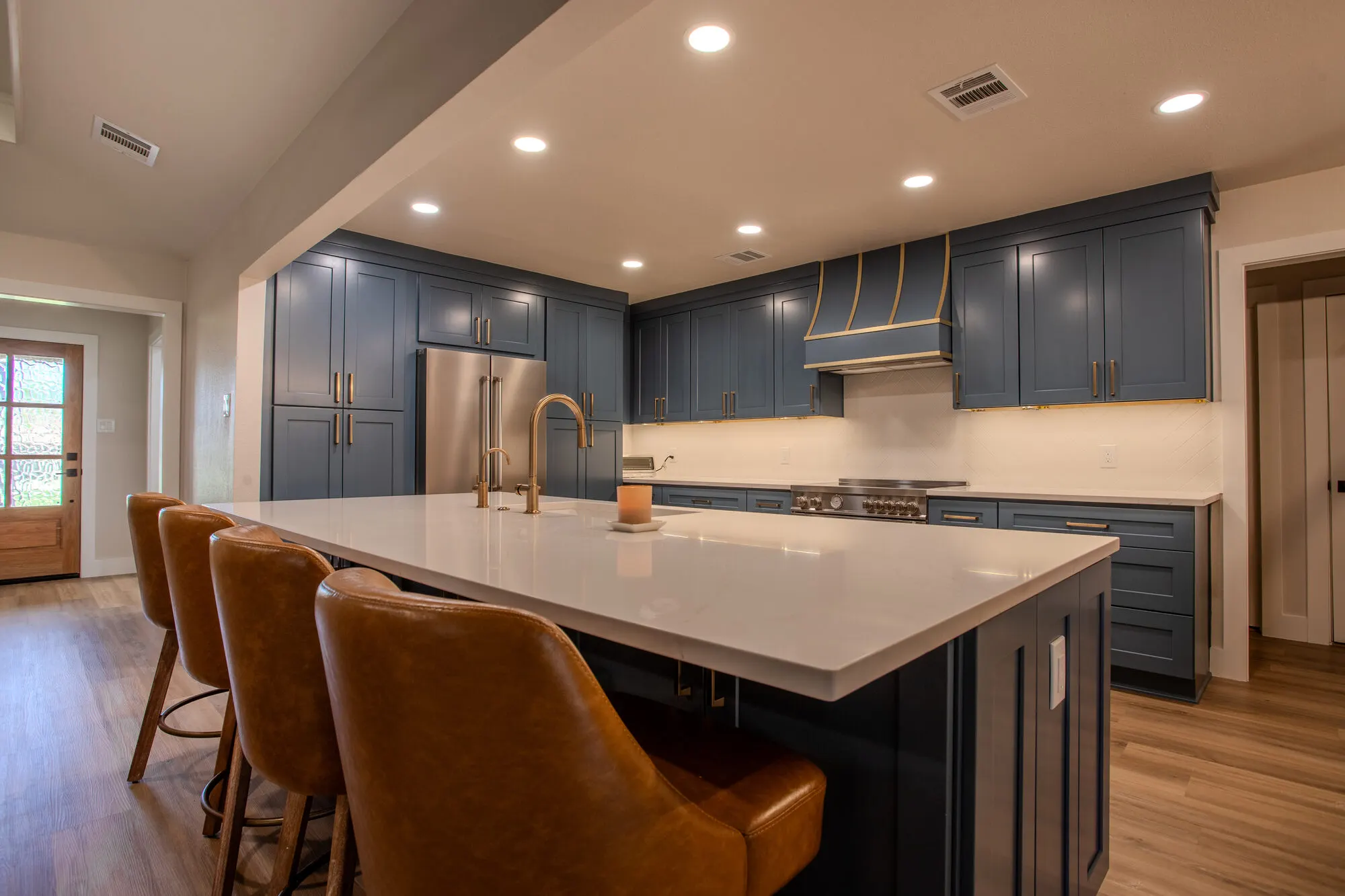
Open-concept means your kitchen is also your living room. Smells, noise, mess, dishes in the sink during a movie. Storage that used to live on uppers needs a new home. Acoustics get harder. Lighting has to do more work because there's no doorway to define a zone. None of this is a deal-breaker — but it's worth designing for, not discovering.
Often a wider opening or a half-wall does what homeowners actually wanted. More on the kitchen side of this in our kitchen remodeling service.